
A Whole Team of Digital Workers, Working Together
One AI teammate can take a chore off your plate. Several of them, working together like a small staff, can finish the jobs that always stall in the middle — and that changes what a small business can take on.
The job that dies in the middle
Someone filled out the form on your website on Thursday. They want a quote. Which is great — that’s the whole point of the website. Answering them means looking up what they asked for, checking your calendar, writing the reply, sending the quote, and following up when they go quiet. Five small steps. None of them hard.
You did the first two on Friday. The reply went out Monday, opening with “sorry for the delay” — which, at this point, is basically your letterhead. The follow-up never went out at all, because by then it was a new week with a new Thursday and a new form.
Here’s the thing worth noticing: that job didn’t stall because any step was difficult. It stalled between the steps — in the handoffs, where the work sat waiting for you to pick it up and carry it to the next stage. In a big company, a job like that moves across three or four desks. In yours, every desk is you.
One helper is good. A staff is something else.
Earlier in this series we met the AI teammate — a digital worker you hand one repetitive job to, which it then does every day without being asked twice. One teammate answering customer questions, or chasing invoices, is already a real change.
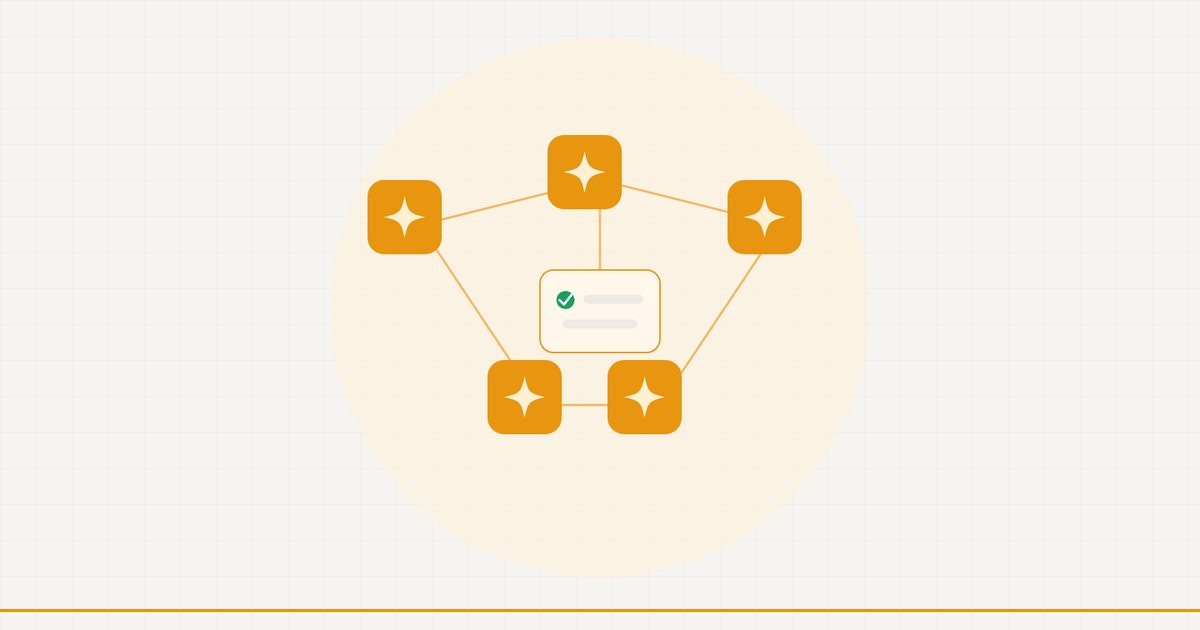
But most of the work that actually grows a business isn’t one job. It’s a relay: find the lead, learn a little about them, draft the note, send the quote, book the call, send the reminder. And this is where it gets interesting — because AI teammates can work together. One finishes its part and hands the work to the next, the way a small staff does. One finds the lead. Another drafts the reply. Another books the call. Nobody forgets whose turn it is, and nobody lets it sit in a tray until Thursday becomes Monday.
This is the part a single app could never pull off. You’ve probably got apps for half these steps already — one holds the calendar, one sends the emails, one has the customer’s details. Each one does its step and then just sits there, waiting. The carrying-between — the part that makes it a finished job instead of five started ones — has always been you. That’s the job a team of digital workers takes over: not the steps, the handoffs.
A few scenes, to make it real.
The tradesperson. An inquiry lands at 9 p.m. — someone wants a fence looked at. One teammate reads it and pulls together the details of what’s being asked. Another drafts the reply and has it waiting for you in the morning. You check the price — that part is yours — and approve it over coffee. A third teammate then offers the customer some times and books the visit, and a fourth sends a reminder the day before so you’re not driving out to an empty house. Your total involvement: one nod, before your first job of the day.
The clinic. A new patient calls after hours and leaves a message. One teammate answers the routine questions — hours, what to bring, whether you take their insurance. Another gets the intake form filled out before the visit instead of on a clipboard during it. Another books the appointment and handles the inevitable reschedule politely. The person at the front desk arrives to find a note saying who’s coming and what’s already done — instead of a voicemail light and a small sense of dread.
The solo founder. While you sleep, one teammate finds the handful of prospects actually worth your time. Another learns just enough about each to say something relevant. Another drafts the introduction in your voice — the good version of your voice, the one you have on the first email of the day, not the ninth. You wake up, edit two lines, approve. And when someone writes back “sure, let’s talk,” another teammate finds a slot and books the call. You never once thought I should really follow up with those people. It just happened.
What you actually get back
The obvious answer is time. But the more honest answer is follow-through. Every small business has jobs it starts well and finishes rarely — not from laziness, but because finishing needs the same person to show up at five different moments, and that person is busy being every other department too.
When a team of digital workers runs the relay, jobs don’t stall in the middle anymore. The follow-up goes out every time, not just in the weeks when you’re on top of things. The quote gets chased. The reschedule gets handled. Your business starts behaving the way you always intended it to — the way it does in the version of the week you plan on Sunday night, before the actual week shows up.
And your role shifts to something that looks suspiciously like being the boss: setting the direction, making the judgment calls, approving the things that matter. Which was, if memory serves, the original job description.
Keeping it honest
The judgment stays yours. What to charge, whether to take the job, what to say to the customer who’s politely furious — that’s not handed over, and nobody serious suggests it should be. The teammates run the errands between your decisions; they don’t make the decisions.
You also don’t hire the whole staff on day one. You wouldn’t do that with people, and it works the same way here. Most businesses start with one relay — usually the one that embarrasses them most, often the quote-and-follow-up one — with two teammates and you approving everything. Trust builds the way it does with any new hire: they do the work, you check it, and gradually you check less.
And when something unusual comes down the line, the work stops and waits for you — which is exactly what you’d want a sensible junior to do.
Dream bigger
Here’s tonight’s five minutes. Pick one job in your business that always stalls halfway — you’ll find a candidate fast; there’s probably one stalled right now. Walk through its steps and notice where it stalls. Almost always, it’s not at a hard step. It’s at a handoff, where the job is waiting for you to carry it.
Now imagine that job simply finishing. Every time. Without you carrying it.
Then ask the bigger question: what would you say yes to if follow-through were guaranteed? The larger customers you don’t pursue because you can’t keep up with the back-and-forth? The second location you’d need a small office staff to run? You may find the ceiling on your business was never the work itself — it was how many things one person can carry between desks.
You’ve been the whole team for years. It might be time to give yourself one.