
Half the class booked online. The other half texted you.
The app says nine. Your phone says eleven. Here's how every booking ends up on one register, whichever door it came in by.
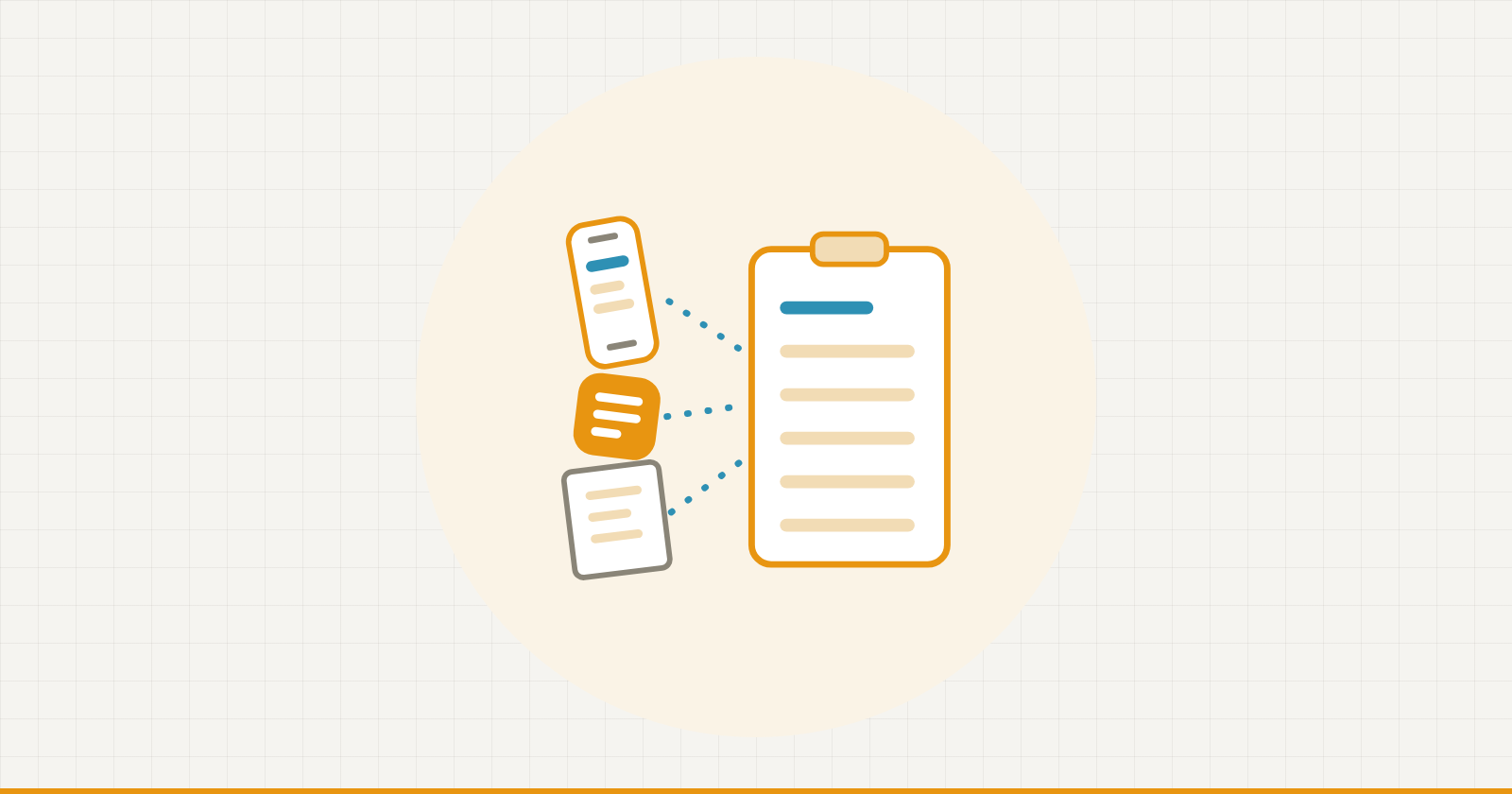
hey is there space in the 6am tomorrow
me and Jo want to swap to Thursday if that’s ok
sorry can’t make tonight — can I use it next week?
Three of them, the last at 9:47pm, on the phone by the bed that is also the business phone. The app says nine of twelve for the six o’clock. Your phone says eleven. Neither number is the real one, and you won’t know the real one until people come through the door and you count.
What two lists actually cost
Count the messages, not the classes. Fourteen classes a week, and every one collects four or five messages that aren’t bookings: a swap, a cancellation, someone asking whether a friend can try it, someone who paid by transfer and forgot to put a name on it. Two minutes each, if you answer straight away — and you do answer straight away, at 9:47pm, because not answering feels rude.
That’s about two hours a week. Call it $120 of your own time at $60 an hour if you like, but the money isn’t really the point. The point is that those two hours arrive in ninety-second pieces spread across seven evenings, and there is nothing else a person can do with ninety seconds of an evening.
Then there’s the money that is the point. A twelve-space class that runs with eight, on a night when three people were on a list nobody had time to work through. The regular who texted a cancellation on Tuesday, got no reply, assumed she’d been charged for it and hasn’t been back since. The class you overfilled by two, where two people stood at the back being apologised to, and neither of them booked again.
How it gets handled
Nobody is going to make your members download anything. Half of them will text you no matter what you build, and the ones who text you are often the ones who’ve been coming for four years. So the fix isn’t to stop the texting. It’s to have one register that every booking lands on, whichever door it came in by.
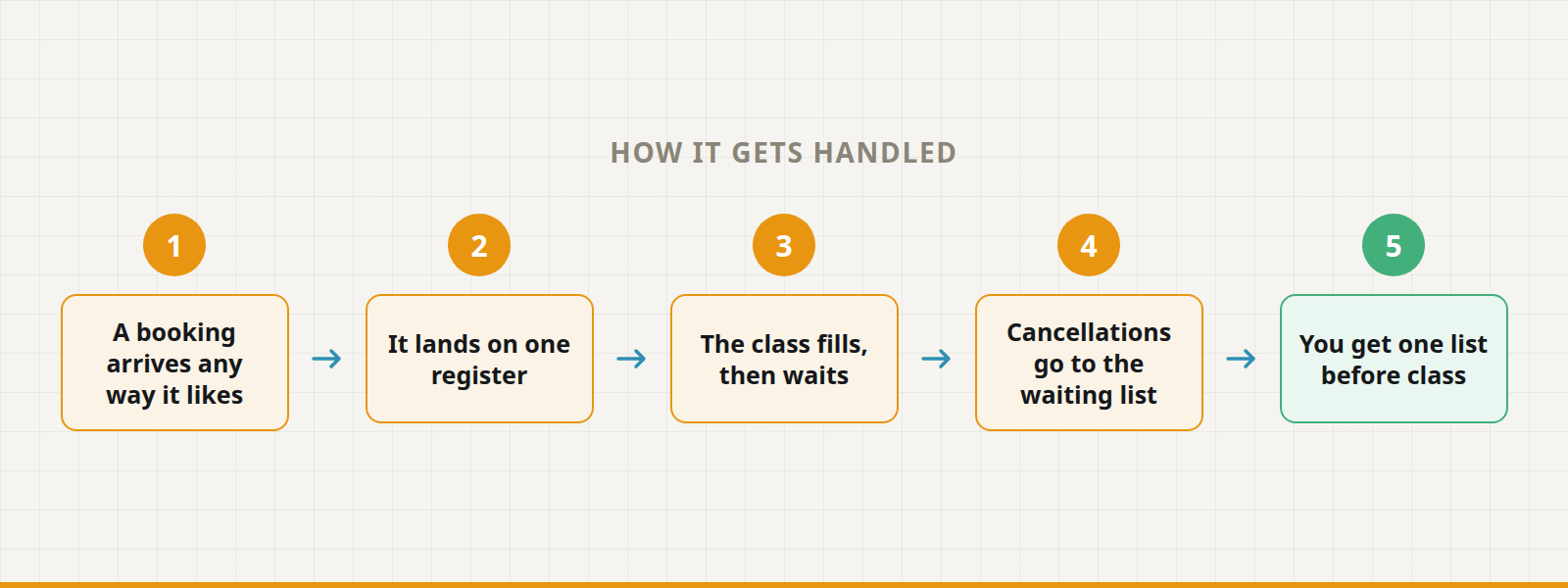
Here’s the order it actually happens in.
1. A booking arrives any way it likes. The app, a text, a message on Instagram, the form on the website, or someone catching you on the way out to say put me down for Thursday.
2. It lands on one register. Same list, same class, same count. The text at 9:47 and the booking made through the app are the same kind of thing by the time either of them reaches you.
3. The class fills, then waits. When the twelfth space goes, the thirteenth person is told immediately that they’re on the waiting list and roughly where. Nobody finds out they’re standing at the back by standing at the back.
4. Cancellations go to the waiting list. Someone drops out at eight in the morning and the space is offered down the list, taken by whoever answers first. The person who cancelled gets whatever your policy is — a credit, a make-up, a note that says no problem.
5. You get one list before class. Names, who’s paid, who’s new, who’s on a trial, who to say hello to.
In the catalog this one is the Class Desk Agent, which is a fair description: it’s the person at the front desk who knows who’s coming. You’ve never had one, because you’ve never had a desk.
A few versions of it:
The pilates studio. Twelve reformers, and the difference between eleven booked and thirteen booked is a person in the doorway being apologised to. Here the equipment is the limit, not the calendar — and when a space opens at six in the morning it gets offered, taken and closed before you’re properly awake.
The swim school. Term blocks rather than drop-ins. Two children from one family on different days, one payment covering both, a waiting list for the Saturday nine o’clock that everybody wants, and forty parents to tell when the pool shuts for maintenance. Enrolment stops being a fortnight of admin every term and becomes something that runs while the term does.
The pottery studio. A six-week course is not six drop-ins, and the difference matters, because week three assumes week two. Someone who misses a Tuesday gets offered the make-up that actually exists rather than the one they were hoping for, and the wheel that was going to sit idle on Thursday gets used.
A full register is partly a marketing problem, and marketing is the thing that stops first. Not having posted since March is how a Tuesday class goes quiet.
What it won’t do
It can’t weigh loyalty against a faster thumb. The regular who’s been coming since you opened, against the person who booked eleven seconds sooner: some of those calls are about the kind of room you’re running, not about rules. You can hold spaces, pin names and overrule any of it. Choosing stays yours.
Nothing reaches a member without your say-so at the start. You read the confirmations, the waiting-list messages and the cancellation replies until they sound like you rather than like a chain gym, and then you decide which ones can go on their own.
It won’t chase money it can’t see. Cash in the tin, a transfer with no reference, the friend who sorted it with you last week: none of that reaches it. It can tell you somebody’s on the register with nothing against their name. What happened in the car park is between you and them.
And it can’t fill a class that isn’t working. If the Wednesday seven o’clock has run with four people since March, the problem is the night, the teacher or the price. A tidy register shows you that sooner and more plainly, which is useful, and is not the same thing as a fix.
Stop counting heads to find out who’s in the room.
Operio builds and runs the AI workers that take a job like this off your desk — set up around how you actually work, watched over, and improved as it goes. You approve everything before it reaches a customer.
Or browse the full catalog of specialists to see what else can come off your plate.