
Three empty slots tomorrow and a six-week waiting list
Tomorrow has gaps in it and forty-one people are waiting. Here's how the two lists find each other without anyone making twelve phone calls at half past five.
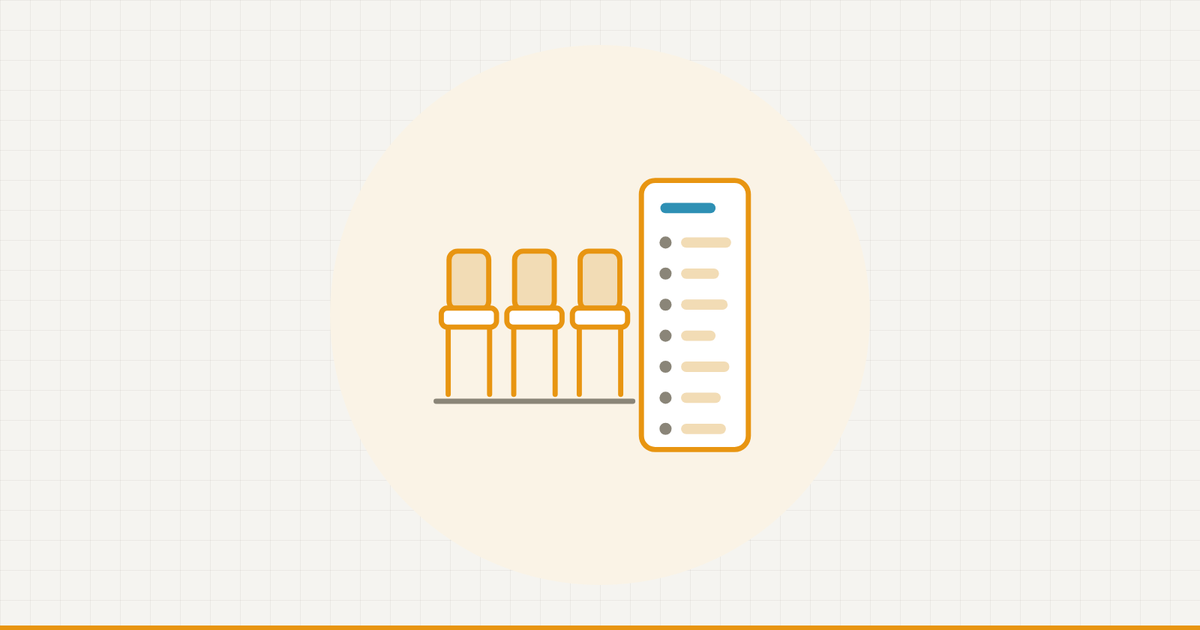
Tomorrow has three gaps in it.
Quarter past eleven, half one, and the four o’clock that cancelled this afternoon by text with an apology and a smiley face. The waiting list has forty-one names on it. Some of them have been waiting since June.
Both of those things are true at once, in the same practice, and the only thing standing between them is somebody with a spare half hour and the stomach to ring twelve people who are all at work.
Nobody has that half hour at half past five.
What an empty chair costs
Every gap in tomorrow’s book already has a price on it. Say a check-up is $95 and a hygiene appointment is $110. Three gaps tomorrow is $300 that doesn’t come back — the day happens either way, and the room and the person in it cost the same whether anyone sits down or not.
Do that twice a week and you’re at roughly $2,400 a month. Sit with that number for a second, because it isn’t a discount you offered or a job you priced wrong. It’s an empty room.
Then there’s the other end of the same problem. Somewhere in your system is a list of everyone due — the six-month check, the annual review, the booster, whatever your cycle is. It gets worked properly in January, when somebody has an afternoon, and then it doesn’t get worked again until May. The people on it don’t complain. They quietly stop being your patients, and you find out eighteen months later when something hurts and they go to the place with the evening clinic.
And the filling itself is real work. Twelve calls to fill one slot, three minutes each once you count voicemails and being asked to hold, is over half an hour of front desk time — say $28 an hour — to sell $95, done by the same person who is also checking people in.
How it gets handled
It’s one list doing two jobs: bring back the people who are due, and fill tomorrow’s holes from the people who said they’d take one at short notice.
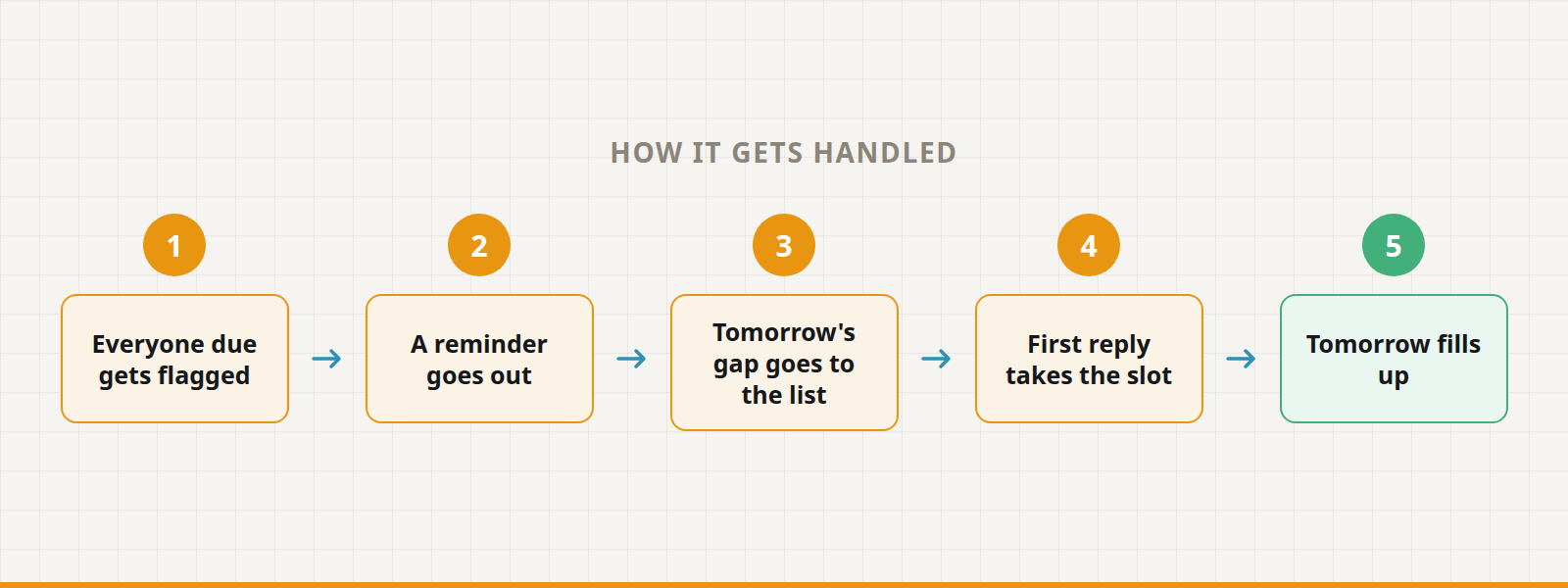
Here’s the order it actually happens in.
1. Everyone due gets flagged. Six-month checks, annual reviews, boosters, the follow-up nobody booked on the way out. Sorted by how overdue they are, so the person who last came in two years ago isn’t behind the one who’s a week early.
2. A reminder goes out. Text or email, in your words, with the thing that matters most in it: a link that books the appointment then and there, while they’re holding the phone.
3. Tomorrow’s gap goes to the list. The four o’clock cancels at 5:12pm. A minute later, the people who said “let me know if anything comes up” — the ones who wanted an earlier date, the ones who work nearby — know there’s a four o’clock tomorrow.
4. First reply takes the slot. It’s gone when it’s gone, and everybody else is told straight away instead of ringing at nine to find out. Nobody turns up for an appointment somebody else took.
5. Tomorrow fills up. You look at the column at six and there are two gaps instead of three, or none at all. Nobody made a phone call.
The catalog calls this one the Recall & Reminder Agent. Half the job is patient and long-range: the people due in October get asked in October. The other half is fast — it moves a cancellation to somebody who wants it before you’ve finished reading the text that caused it.
A few versions of it:
The dental practice. Recall is the business, and the recall list is the thing that gets done in bursts. Working it steadily changes what your Tuesdays look like: the hygienist’s column fills three weeks out, and the patients who drifted off over the last two years get one warm nudge each instead of nothing at all.
The garage. You know exactly when every car you’ve touched is due again — twelve months from the last service, and the test date is on the paperwork in front of you. The reminder that lands a fortnight before is the one that gets the booking. The reminder that lands three weeks late finds a customer who has already been to the place by the retail park, because they got a text and you didn’t send one.
The veterinary clinic. Boosters, worming, the post-op check people mean to book and don’t. And the cancellation problem in its purest form: a forty-minute consult falls out of Thursday morning, and there is a list of people who would take Thursday morning if anybody asked them. Somebody asks them.
Filling a gap assumes booking is easy. When it isn’t — when it’s six emails to agree one time — the gap wins.
What it won’t do
It doesn’t chase people who’ve asked you to stop. Off the list is off the list, permanently, on one reply — and the record of who said no lives somewhere other than one receptionist’s memory, which is worth having on its own.
Nothing goes out without your say-so at the start. You read the recall wording, the reminder wording and the short-notice message before any of them send, and you keep approval for as long as you want it. Most practices let the routine reminders run themselves after a few weeks and hold on to everything else.
It won’t fill a slot nobody wants. Eight in the morning in the middle of the school run is empty because of when it is, and asking forty-one people about it faster doesn’t change that. It does show you the pattern in a fortnight rather than a year, which is a real answer, just not the one you were hoping for.
And it can’t fix why people are leaving. If they don’t come back because the last visit ran forty minutes late, or the price went up without a conversation first, then more reminders reach that conclusion faster. That’s a different problem and it stays yours.
Stop ringing twelve people to fill one chair.
Operio builds and runs the AI workers that take a job like this off your desk — set up around how you actually work, watched over, and improved as it goes. You approve everything before it reaches a customer.
Or browse the full catalog of specialists to see what else can come off your plate.